When the old constraints disappear
00:03Thank you to Harry and Mindstone for inviting me to speak at EPITECH. This talk is about work and creativity in the age of AI: what becomes possible when old constraints disappear, and what still matters.
00:55I am an enseignant-chercheur at CPE Lyon and a researcher at LIRIS, a CNRS laboratory. Alongside my roles as an educator and researcher, I want to speak as a creator and share some personal experiments with generative AI.

Data. Space. Time.
01:25My research revolves around data, space, and time. During my PhD and postdoctoral work, I studied change: how we represent it and what we can learn from it.
02:08My work includes urban data science, cultural heritage, and three-dimensional visualization. Cultural heritage connects storytelling and memory; three-dimensional views of cities such as Lyon help us explore complex relationships. Together, data, space, and time offer ways to build and explore knowledge.
Three current projects
02:53Three current projects illustrate this work. AGAPE, funded by the French National Research Agency (ANR), explores iconographic heritage. Historical images, photographs, and postcards can be linked with newer sources to understand how places and buildings have changed.
04:04IA.rbre, with the Métropole de Lyon and funding from Banque des Territoires, studies climate resilience. We use AI to examine plantability and heat vulnerability.
04:34Thesaurus Automation Curation (TAC) explores how large language models can help connect historical concepts and enrich their relationships. Relationships that seem evident to people can be difficult for machines to identify automatically.
From symbolic to neuro-symbolic AI
05:18My background is mainly in symbolic AI. During my PhD, from 2011 to 2014, I used rules and declarative languages to represent knowledge, particularly about web services.
05:43Neural approaches offer other possibilities, from identifying objects in photographs to exploring information through large language models. In the FSP TAC project, supported by the Fondation des Sciences du Patrimoine, we bring neural and symbolic approaches together. Symbolic AI still has a role: neuro-symbolic approaches let us explore how these methods can complement one another.
Do we need to train another model?
07:04AI is a broad field, and using it does not always require an energy-intensive model. We should begin by questioning the need: what data, model, and approach does the task actually require?
07:38In IA.rbre, we examine whether existing models can meet our needs before creating new ones. This includes exploring models from IGN. Can we reuse them as they are, or do the results justify fine-tuning? These choices involve both time and energy.
Code in the language you think in
08:46My personal experiments include multilingual programming. In a talk at Capitole du Libre in Toulouse, I explored the idea of a multilingual command line. Teaching had made me notice how commands such as cd and ls can be difficult to remember when the English words behind them are unfamiliar.
09:57AI coding agents gave me an opportunity to revisit that experiment and develop multilingual, a programming language in which people can write in their own languages. The broader idea is not new, and others are working on it too. My experiment asks how AI can help make it possible.
Intelligence as a commons
10:52Open data and open source matter. AI tools benefit from work done by communities, and we should remember those contributions when using them.
11:16Wikipedia and Wikidata illustrate different ways to share knowledge. Wikidata represents facts through structured relationships, such as C having Dennis Ritchie as its developer, or C influencing C++.
11:47Some language communities have too few contributors. How can shared facts help people access knowledge in their own languages? The example on the slide connects structured facts with sentences expressed in different languages. As a Wikidata contributor, I am interested in making knowledge accessible in this way.
Learning changes. So must assessment.
12:33AI can produce good code, but that does not tell us whether students understand the fundamentals. For teachers, this raises difficult questions about assessment, and we are still experimenting with approaches.
13:00Banning AI is not the answer: students need to learn how to use it while developing their understanding. I have explored AI-assisted questions, quizzes, and games, as well as different forms of assessment, including paper-based work. We need to examine what these experiments show.
Don't just generate an image. Build a world.
13:30My creative experiments with multilingual explore what generative AI can offer beyond impersonal images. I use programs written in French to create patterns, including fractals and L-systems.
14:04This brings classical rule systems together with code generated by AI agents. We define rules, introduce probabilities, and explore the surprising results. Generative AI can help us build systems that create, as well as generate individual images.
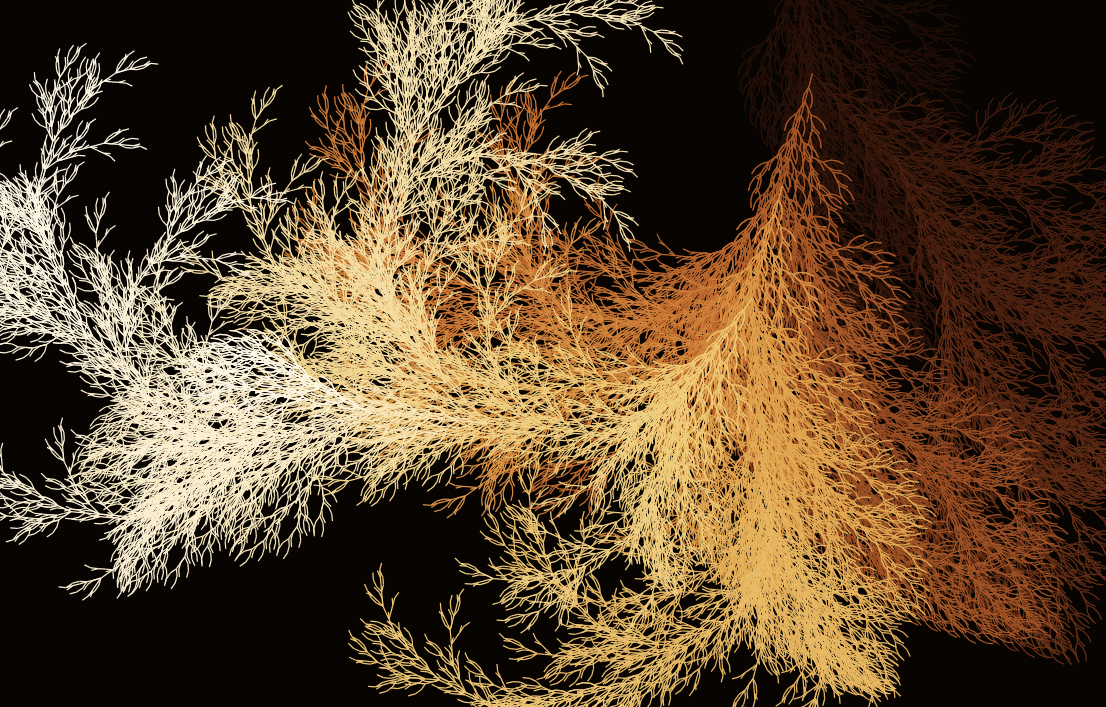
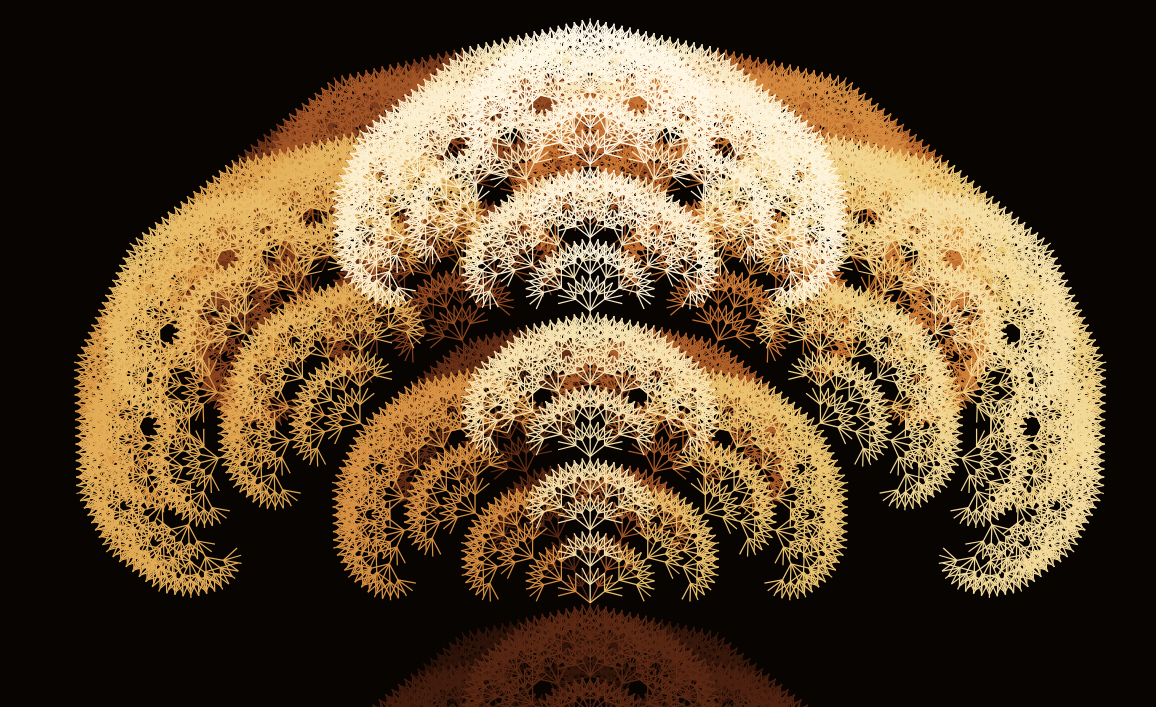
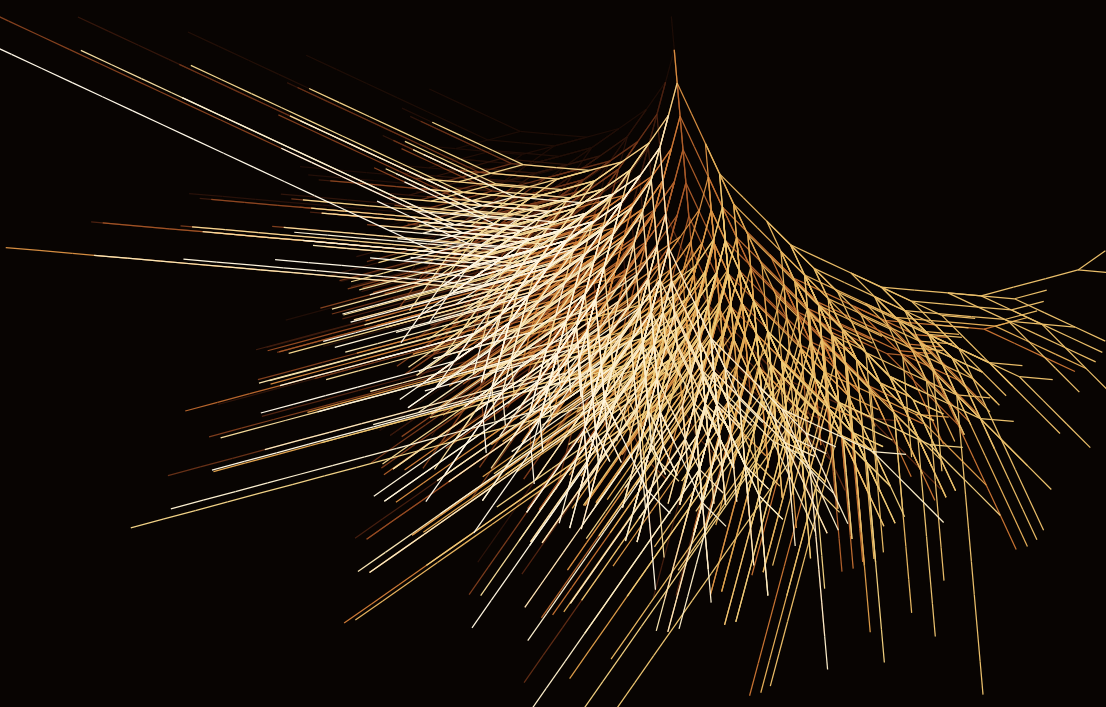
Yes, AI can generate this.
14:56I want to end with a photograph I took in Lyon on February 13, 2024. Walking along the Rhône, I was struck by the colours of the sky and chose to capture that moment.

15:36AI can generate a picture that looks like this, but did my eyes see that scene? Taking a photograph involves an experience, attention to nature, and a choice of frame. Those aspects matter to me as a photographer.
16:10AI also has limitations and biases, including gaps in the languages and information represented in its data. We should keep these in mind while exploring its possibilities.
16:40Creative diversity matters. We do not have to produce the same things repeatedly. People and their creative approaches are diverse; AI should help us explore that diversity. Thank you.